

Explorer Investor Relations
Golden Visa Hub • Residency & Citizenship Insights
Updated 6 January 2026
This article is based on CNN Travel’s feature “‘Grab what you can’: The global rush for second passports” by Julia Buckley (early 2026), and adapts that global analysis to focus specifically on Portugal, the Golden Visa and D7/D8 residency routes.
Original source: CNN Travel – “Grab what you can: The global rush for second passports”, Julia Buckley, 2026.
By 2026, second citizenships and “backup” passports are no longer a niche obsession of the ultra-rich. They’ve become an insurance policy for mobility, education and family security. CNN describes a genuine global rush for second passports. In this piece we unpack that trend and explain why Portugal still sits near the top of the list for rational Plan B strategies – whether through the Golden Visa or more traditional D7 and D8 residency routes.

Macro trend
Second passports surging
Key markets
US, UK, India, China, Turkey
Main use
Plan B & EU mobility
Portugal’s role
Residency, not “cash-for-passport”
“The core message from experts is simple: the fact you qualify for a second citizenship or European residency today does not mean you still will in five or ten years.”
The CNN reporting makes one thing clear: this is no longer a fringe curiosity. Recent polling shows that around 1 in 5 Americans would like to emigrate, with younger women particularly likely to be considering a move. At the same time, leading citizenship and residency firms now report the US, UK, India, China and Turkey among their most active client nationalities.
The profile is no longer just ultra-high-net-worth individuals from unstable regimes. Increasingly, it’s professionals and families who want:
The CNN piece neatly summarises the three classic paths to a second citizenship. Portugal appears in this framework in quite a specific way.
Many European countries – Ireland, Italy, Poland, Portugal and others – allow descendants of emigrants to reclaim citizenship. In practice:
This is the classic path: get a residence permit, live legally in the country for a number of years, learn the language, keep a clean record and show integration. In Portugal, that typically means:
The CNN article underlines how Europe has largely turned against “golden passports”. Malta, Cyprus, Bulgaria, Spain, Ireland and the UK have all scrapped or radically reworked their more transactional schemes. But:
One of the key takeaways from the CNN reporting is that the “supply side” is shrinking:
“Even if you qualify for a second citizenship or European residency today, there is no guarantee that the same rules will still apply in a few years’ time.”
In contrast to pure “passport-for-sale” schemes, Portugal has emerged as one of the few EU countries with a credible residency-by-investment framework plus traditional residency options for retirees, remote workers and entrepreneurs.
In 2026, the picture roughly looks like:
Portugal is not promising “instant passports”, but it does offer a balanced combination of solid residency + potential path to citizenship within an EU/OECD-compliant framework.
CNN quotes advisors who describe a second passport – or strong residency – as a form of insurance against volatility. It’s not necessarily something you use immediately; it’s something you’re grateful to have when things go wrong.
For many families, a Portuguese residence permit can:
They want to keep earning in USD, GBP or other strong currencies while enjoying Portugal’s lifestyle and relative affordability. For them, D8 (and sometimes D2) is often more relevant than any investment scheme.
They see Portuguese residency – especially via the Golden Visa – as a way to lock in mobility, education and security for the next generations without uprooting their lives immediately.
They want to stabilise their retirement in a safe, mild-climate eurozone country with lower costs than many other Western European capitals. For them, the D7 usually offers a more direct and cost-efficient route than any investment program.
Yes – in many ways, that’s the point. As other schemes collapse or get labelled as risky by EU institutions, Portugal’s mix of residency, oversight and EU alignment is exactly what many risk-aware families are looking for.
Experience from Italy, Malta, Spain and Portugal itself suggests that waiting often means facing tougher rules later. Eligibility is not static – the window can become narrower, not wider.
For most people, the first meaningful milestone is reliable residency in a stable EU country. A second passport – if and when it becomes possible – tends to be the cumulative outcome of years of life, investment and integration rather than a quick transaction.

Whether you are exploring the Portugal Golden Visa for EU residency or you simply want to allocate capital to private equity funds in Portugal, our Investor Relations team can help. We will walk you through CMVM-regulated fund options, clarify how they work for residency and for pure investment, and coordinate with trusted immigration and tax advisers. Schedule your confidential, no-obligation strategy call today.

André Bandeira
ab@explorerinvestments.com
Maria Campos Silva
mcs@explorerinvestments.com
Portugal’s Golden Visa has shifted decisively toward CMVM-regulated investment funds. Learn how the €500,000 fund route works in 2026, the key benefits (Schengen mobility, family reunification, minimal stay), and a practical due diligence checklist—built for investors who think in private equity terms.
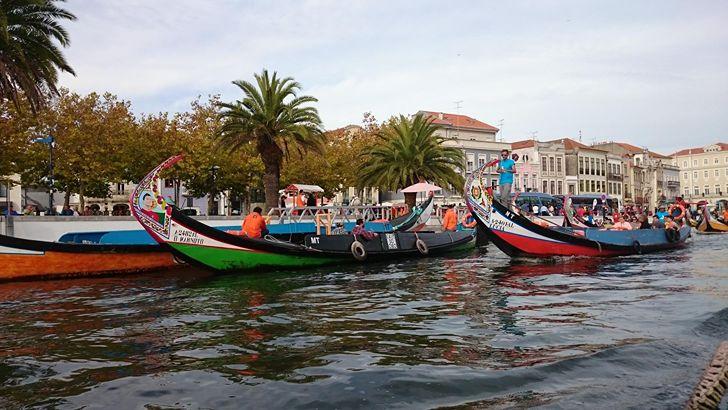
In an unstable world, investors build a mobility hedge. This SEO-first guide explains how Portugal’s fund-based Golden Visa strategy can act as a Plan B for EU optionality, family continuity, and Schengen mobility—aligned with a private equity mindset.

A 2026 guide for Americans comparing five of the easiest dual citizenship options – Portugal, Greece, Italy, Hungary and Latvia – with a special focus on Portugal’s Golden Visa, D7 and D8 residency routes as a long-term EU Plan B.
Get your complete, free guide to the Portuguese Golden Visa. Learn how to invest with confidence through Explorer Investments, the country's largest private equity fund.
André Bandeira
ab@explorerinvestments.comMaria Campos Silva
mcs@explorerinvestments.comCopyright © 2025 Explorer Investments
It is recommended to consult Chapter V of Decree-Law nº 162/2014, of October 31st, published in the Official Gazette, as well as its revision by Law nº 2/2020, of March 31st. The information included here is of a general nature, and therefore each potential investor should seek independent advice (e.g., legal, financial, tax, etc.)