
Tennis legend Novak Djokovic has reportedly joined Greece’s Golden Visa program after purchasing property in Athens, adding his name to a growing list of high-profile investors using residency-by-investment schemes to anchor their European presence.

Serbian publication Sportal reports that Djokovic and his family relocated to Athens earlier this year, acquiring property valued above €700,000 — the minimum threshold required for residency in the Greek capital. He has since spoken publicly about feeling “at home” in Greece during the Hellenic Championship, where he secured his 101st career title.
His decision highlights how the Golden Visa can serve both as a lifestyle enhancement and a strategic base for travel, education, and business operations across the EU.
Greece’s program remains one of Europe’s most accessible, with entry points starting at €250,000 outside major zones and €500,000-€700,000 in Athens, Thessaloniki, and select islands. It grants renewable, indefinite residence permits and extends to spouses, children, and parents of both partners.
Holders gain visa-free movement across the Schengen Area and may maintain their main residence elsewhere. For many, this flexibility — combined with cultural familiarity and a Mediterranean lifestyle — makes Greece highly appealing.
While Greece focuses on property investment, Portugal’s Golden Visa has shifted toward regulated investment funds. These vehicles, supervised by the CMVM, channel capital into productive sectors such as green energy, technology, and infrastructure.
This distinction is key: Portugal’s reform preserved the program’s long-term value while aligning with EU housing and transparency goals — a strategy many view as the model for sustainable residency programs.
For deeper insight, read: From Real Estate to Regulated Funds — The New Golden Visa Playbook.
Djokovic’s move reflects a broader shift among high-net-worth individuals using residency programs as tools for diversification and global mobility. Other athletes, entertainers, and tech founders are similarly pursuing European residency through structured investment channels.
The combination of lifestyle, visa-free travel, and wealth planning advantages continues to make Southern Europe the epicenter of the “golden passport” era.
As programs evolve, transparency and regulation will determine their longevity. Greece may face tightening oversight after 2025’s real-estate surge, while Portugal’s fund model positions it as Europe’s stable, institution-friendly alternative.
Djokovic’s choice illustrates how residency strategies are entering mainstream discourse — where sports, finance, and mobility intersect.
Get personalized guidance on the fund process. Our Investor Relations team can clarify the steps, discuss Explorer's fund options, and connect you with trusted legal experts. Schedule your confidential, no-obligation consultation today.

André Bandeira
ab@explorerinvestments.com
Maria Campos Silva
mcs@explorerinvestments.com
Family-focused guide on using the Portugal Golden Visa to move to Portugal: lifestyle, schooling, healthcare and how a €500k CMVM-regulated fund investment can underpin a five-year citizenship strategy.

Step-by-step Portugal Golden Visa checklist for the €500k fund route in 2026: CMVM fund selection, NIF and bank account, documentation, subscription, application filing and common mistakes to avoid.
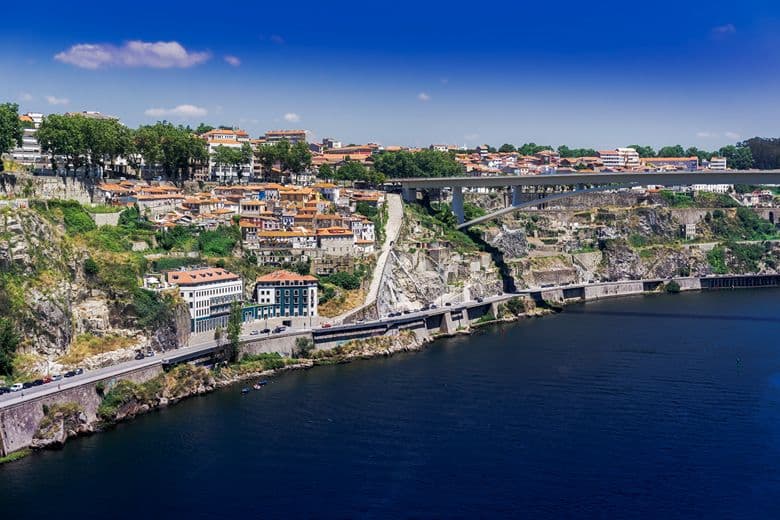
Canadian interest in the Algarve has surged thanks to direct Toronto–Faro flights, mild winters and lower living costs. This guide explains how Canadians are using the D7 passive income visa, the D2 entrepreneur visa and the €500k Portugal Golden Visa fund route to relocate, invest and secure EU residency.
Get your complete, free guide to the Portuguese Golden Visa. Learn how to invest with confidence through Explorer Investments, the country's largest private equity fund.

André Bandeira
ab@explorerinvestments.comMaria Campos Silva
mcs@explorerinvestments.comCopyright © 2025 Explorer Investments
It is recommended to consult Chapter V of Decree-Law nº 162/2014, of October 31st, published in the Official Gazette, as well as its revision by Law nº 2/2020, of March 31st. The information included here is of a general nature, and therefore each potential investor should seek independent advice (e.g., legal, financial, tax, etc.)